
A landscape of contrasts
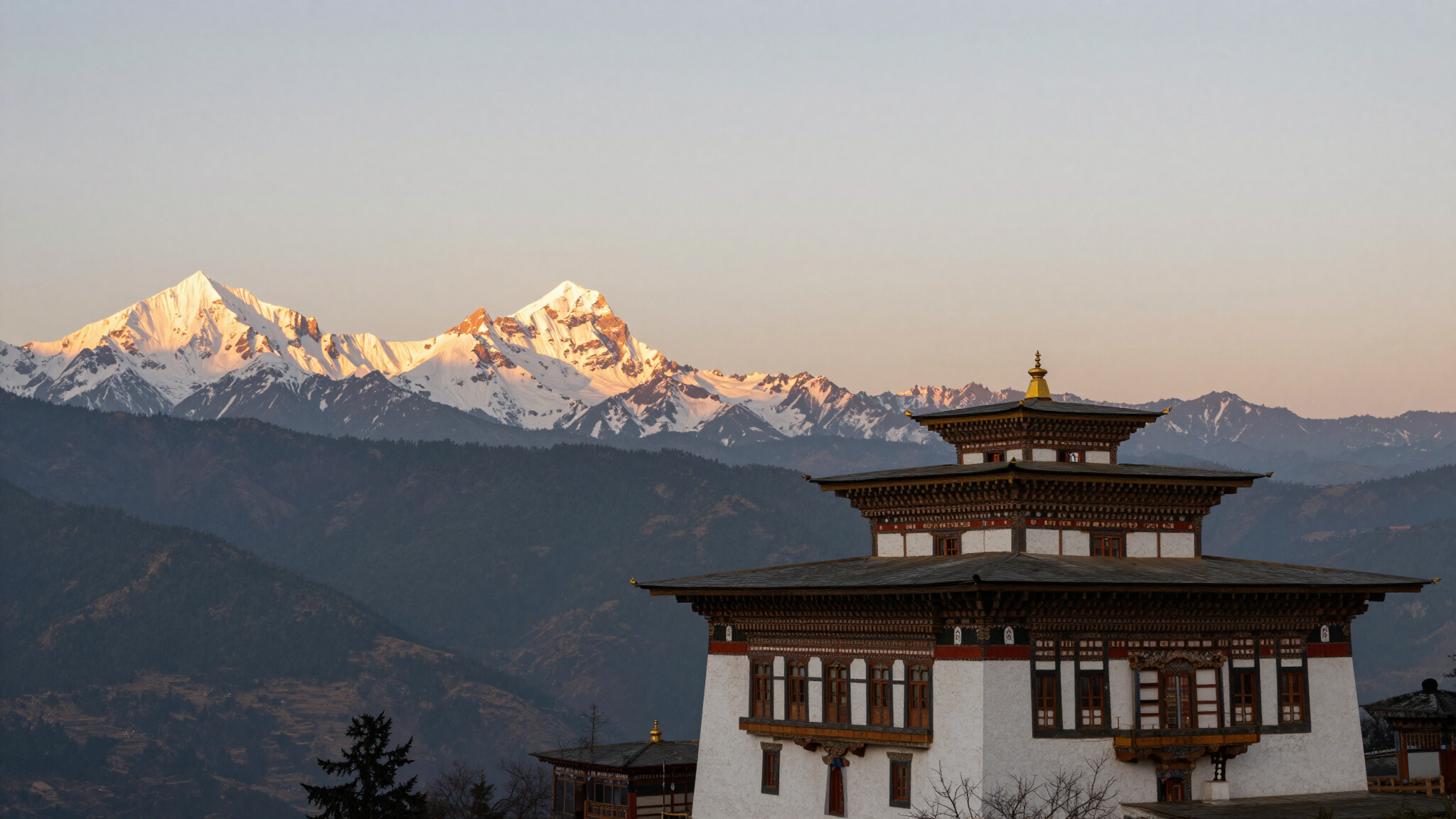
Bhutan’s landscape moves between subtropical valleys, forested hills and high Himalayan peaks. The country’s Department of Tourism describes this range as central to its biodiversity. Looking beyond a single mountain view reveals a place with different climates, habitats and ways of life. For NORBU, this variety is a starting point for understanding the land behind the brand.
Dzongs and the life around them
A dzong is a fortified complex with an important place in Bhutanese religious and civic life. Bhutan’s submission to UNESCO’s Tentative List describes five dzongs — Punakha, Wangdue Phodrang, Paro, Trongsa and Dagana — as centres of religious and administrative authority. Their courtyards, towers and timber details record centuries of adaptation. These buildings remain connected to the communities around them; they are more than a backdrop to the mountains.
Craft as a living tradition
Bhutan’s thirteen traditional arts and crafts are known as zorig chusum. The Department of Tourism describes skills that include carpentry, sculpture, ceramics and blacksmithing, passed between generations while contemporary artists develop new work. This relationship between continuity and change offers a thoughtful way to look at Bhutanese culture. A carved detail or a carefully made object can tell a story without needing to be loud.
A sense of place
The landscapes and traditions of Bhutan invite closer attention. They also give context to NORBU’s interest in calm, authenticity and considered design. We begin with a place, then look at the details: the shape of a mountain, the rhythm of a courtyard, the care in a crafted surface. Understanding that context makes the connection more meaningful than a scenic image alone.
Sources
Bhutan Department of Tourism — About Bhutan